
Uganda’s Legal Showdown: ULS vs. Judiciary – A Battle for Justice or Contempt of Court?
By: Bryan Miller

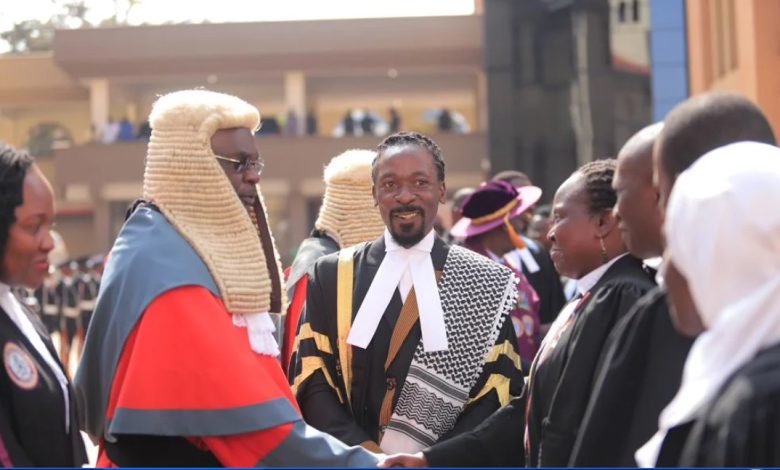
In February 2025, a significant legal confrontation emerged between the Uganda Law Society (ULS) and the nation’s judiciary, centering on ULS President Isaac Ssemakadde. This dispute has ignited a broader conversation about judicial authority, freedom of expression, and the mechanisms available for legal redress in Uganda.
Background of the Contempt Ruling
On February 14, 2025, High Court Judge Musa Ssekaana sentenced Isaac Ssemakadde to a two-year imprisonment for contempt of court. The judgment stemmed from allegations that Ssemakadde had made derogatory remarks about the judiciary on social media, particularly targeting Justice Ssekaana following an unfavorable ruling in Miscellaneous Application No. 1243 of 2024. Justice Ssekaana asserted that such comments undermined the judiciary’s integrity and could not be tolerated.
Uganda Law Society’s Response
The ULS swiftly and vehemently opposed the ruling. In an official statement, the society described the judgment as “one-sided, irregular, and manifestly void of any legal effect.” ULS Vice-President Anthony Asiimwe emphasized that the organization viewed the ruling as an abuse of judicial power and declared that Ssemakadde would not be detained. The ULS contended that the judgment violated principles of natural justice, particularly the right to a fair hearing, as Ssemakadde was not present during the proceedings.
Judiciary’s Position
Prior to the contempt ruling, during the opening of the New Law Year, Chief Justice Alfonse Owiny-Dollo criticized the ULS leadership for what he termed unethical behavior and public insults directed at the judiciary. He cautioned that such actions would have repercussions and underscored the necessity for mutual respect between the bar and the bench.
Legal and Constitutional Implications
This confrontation raises critical questions about the balance between upholding judicial authority and protecting freedom of expression. Legal experts have pointed out potential conflicts of interest, noting that Justice Ssekaana presided over a case in which he was personally implicated. This situation challenges the principle that no individual should judge a matter in which they have a personal interest. Additionally, concerns have been raised regarding Ssemakadde’s absence during the ruling, which may contravene his constitutional right to a fair hearing.
Stakeholder Actions and the Path Forward
In light of the escalating tensions, there have been calls for mediation to restore harmony between the judiciary and the legal fraternity. Commentators have suggested appointing a neutral arbiter to facilitate dialogue and address the underlying issues contributing to the discord. Such a move could help reestablish mutual respect and ensure that both institutions function collaboratively in the interest of justice.
As this situation continues to develop, it serves as a pivotal moment for Uganda’s legal community to reflect on the principles of justice, the importance of free expression, and the mechanisms through which grievances against judicial actions can be appropriately addressed.


