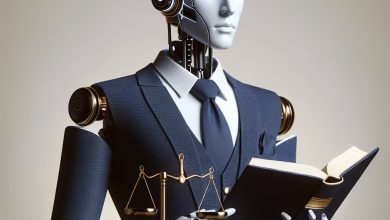
Judgment in the Digital Court: Should African Judges Speak or Stay Silent on Social Media?
By Legal Africa Editorial


In today’s hyperconnected world, silence can be powerful but so can a voice. For African judges, whose robes symbolize impartiality and integrity, the dilemma of whether to engage on social media is no longer theoretical. The courtroom is no longer the only space where influence is wielded Twitter, Facebook, and LinkedIn are the new public forums. But should the custodians of justice be active there?
The Dilemma: Visibility vs. Neutrality
A judge’s public silence has long been understood as a badge of objectivity. But as the justice sector faces increasing scrutiny, access to information becomes more democratized, and misinformation spreads like wildfire online, many question whether a quiet bench is still the right response. Should judges defend themselves, demystify the judiciary, or even educate the public on legal processes?
Or does every tweet chip away at the temple of justice?
Across Africa: Different Laws, One Caution
In South Africa, the Judicial Code of Conduct emphasizes that a judge “must always act in a manner which promotes public confidence in the integrity of the judiciary.” While it does not explicitly ban social media use, the code implies that online behavior should not reflect bias or create an appearance of impropriety.
In Kenya, the Judicial Service Code of Conduct and Ethics warns judicial officers against expressing views on matters that may come before them or that may erode public confidence in the judiciary. After the 2022 general elections, Kenyan judges received both praise and criticism online—some even faced doxing, prompting a judicial memo discouraging personal social media activity.
In Ghana, while no specific law restricts judges from having social media accounts, the general ethical principles in the Code of Ethics for Judges and Magistrates advise against any behavior that compromises impartiality. In practice, Ghanaian judges maintain an almost monastic digital silence.
In Nigeria, the National Judicial Council has encouraged judges to stay off social media entirely unless it’s strictly for educational or academic purposes. This follows backlash in 2020 when a judge’s old Facebook posts were cited as evidence of political bias.
What Thought Leaders Are Saying
Justice Ntemi Mwelase, retired judge of South Africa’s Supreme Court of Appeal, says:
“In the 1980s, we feared censorship. Today, we fear visibility. But the judiciary cannot afford to be an island anymore. Silence, too, sends a message—often the wrong one.”
Dr. Ifeoma Obi, legal ethics lecturer at the University of Lagos, adds:
“Judges must be mindful of their digital footprints. A post liked, a tweet retweeted—even if innocent can compromise a decade of impartiality. But I also believe they can play a neutral educational role without harming their judicial integrity.”
Chief Justice Martha Koome of Kenya, speaking in a 2023 judicial symposium, noted:
“We must humanize the robe without politicizing the gavel. A judiciary that engages responsibly with the public will strengthen not weaken confidence in the system.”
The Gray Areas
Social media is not just about voicing opinions. It’s also about who judges follow, what they “like,” and how they interact. For example, should a judge be criticized for following a politician’s page or a controversial activist? Should liking a tweet be treated as endorsing it?
Furthermore, consider situations where a judge’s family member is active online and shares political views. Does that reflect on the judge? Some countries, like Uganda, are now debating whether family conduct should influence judicial discipline.
When Silence Harms Justice
In 2021, false rumors circulated on WhatsApp and Twitter that a Ugandan High Court judge had been bribed during a land case. The judiciary took three days to respond. In that time, reputations were damaged, threats were made, and public confidence faltered.
Had the judge or the court had an official, prompt social media presence, the damage might have been contained.
A Middle Ground: Institutional Voice vs. Personal Opinion
Perhaps the answer lies not in silencing judges, but in professionalizing their digital presence. Judicial Services Commissions could run official accounts for courts that clarify rulings, educate the public, and respond to attacks without making judges themselves targets.
Similarly, media training for judges can equip them to engage responsibly when they must speak, especially in defense of the judiciary’s credibility.
The Risks of Overreach
Let’s not ignore the flip side: if judges become too comfortable online, they may cross lines they didn’t intend to. A single opinionated post can taint a trial years later. Public trust, once lost, is rarely recovered.
And then there’s surveillance. In authoritarian regimes, judicial online activity could be used to coerce, intimidate, or delegitimize independent judges.
DON’T MISS THIS : THE ROBED COMPROMISE: Can Africa’s Judges Truly Stand Above Corruption?
Final Thought: Silence is Not Always Golden
The conversation around judges and social media in Africa is just beginning. The stakes are high not just for individual reputations, but for the integrity of justice itself. The goal is not to mute judges forever, but to define the lines clearly, cautiously, and with the times.
In a digital world where truth travels slowly and misinformation spreads like fire, perhaps it’s time to stop asking whether judges should speak and start asking how they can do so without compromising the sanctity of justice.