Kenya’s Seed Ruling Rewrites the Rules of Africa’s Food Sovereignty
By Ochieng Jones | Legal Africa

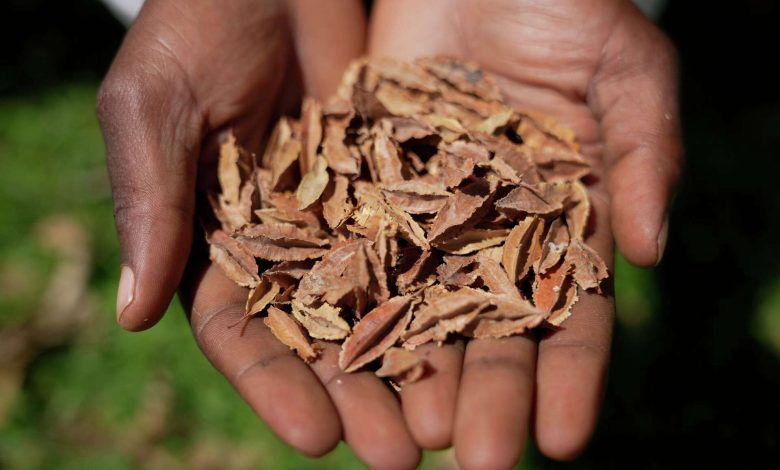
Kenya’s recent High Court judgment striking down restrictive seed-sharing laws is more than a domestic legal victory. It signals a turning point in the global conversation on food sovereignty, agricultural markets, and the balance of power between traditional farming communities and multinational agribusiness corporations.
Across Africa, where over 65% of the population relies on smallholder farming and indigenous seeds account for more than 80% of planted varieties, the ruling carries implications that reach far beyond East Africa’s borders. It challenges long-standing assumptions about how modern agriculture should be regulated and who gets to shape that regulatory architecture.
A Legal Win Rooted in Generations of Practice
The High Court’s decision centers on provisions of Kenya’s Seed and Plant Varieties Act (2012) that effectively criminalized the saving, sharing, or selling of indigenous seed varieties without formal certification. For farmers who have exchanged seeds freely for centuries, such laws were not only impractical they were existential.
By declaring these restrictions unconstitutional, the Court affirmed that indigenous seed systems are not outdated relics. They are living, evolving knowledge systems, critical to food access, economic participation, cultural identity, and climate resilience.
This marks one of the few times in African jurisprudence that a court has explicitly prioritized traditional agricultural rights over commercial regulatory demands.
The Global Tension: Standardization vs. Sovereignty
The battle over seed regulation is not unique to Kenya. Around the world, commercial seed laws reflect the pressures of:
-
Global market harmonization
-
Intellectual property protection
-
Expansion of genetically improved and hybrid seed markets
-
Corporate-led standardization
These laws are often promoted under the banner of modernizing agriculture.
But for rural Africa where the majority of farmers operate outside industrial systems such frameworks can unintentionally undermine food security.
In many countries, certification systems favor commercial seed developers whose business models depend on annual seed purchases. Meanwhile, indigenous varieties which are often more adapted to local climates, soils, and pests are sidelined.
Kenya’s ruling reopens a critical question:
Should African food systems be governed primarily by market efficiency or community sovereignty?
The Economic Stakes for Africa
Agriculture accounts for 33% of Africa’s GDP and employs nearly half of the continent’s workforce. Seed systems are therefore not only cultural assets but economic anchors.
Modern commercial seeds undoubtedly have a role especially in large-scale agriculture, export crops, and yield-intensive farming. But indigenous seed networks, estimated to supply 65–80% of food crops in low-income rural communities, remain the backbone of the continent’s food production.
If seed laws inadvertently penalize or replace these systems, the consequences include:
-
Increased production costs for smallholder farmers
-
Reduced biodiversity and climate resilience
-
Dependence on annual seed imports
-
Greater vulnerability to global supply chain disruptions
Kenya’s ruling offers policymakers across Africa an opportunity to re-evaluate whether regulatory frameworks support the continent’s long-term agricultural competitiveness or unintentionally weaken it.
A Precedent for Policy Reform Across the Continent
The judgment sets a powerful precedent for other African nations currently reviewing or drafting agricultural policies. It suggests that modern laws must balance:
-
Intellectual property protection
-
Market development
-
Farmers’ rights
-
Cultural preservation
-
Climate adaptation
-
National food security objectives
This blended approach is increasingly relevant as African governments aim to:
-
Build resilient local food systems
-
Develop regional seed markets under AfCFTA
-
Support climate-smart agriculture
-
Attract agribusiness investment without displacing rural livelihoods
In this context, Kenya’s decision underscores that innovation and tradition are not opposing forces. They are parallel pillars of Africa’s agricultural future.
The Bigger Message: Africa Must Shape Its Own Agricultural Agenda
One underlying truth exposed by the Kenyan case is the question of authorship — who drives the continent’s agricultural legislation?
For decades, some seed laws across Africa have been influenced by foreign trade interests, multinational seed companies, or international standardization bodies. While global best practices are important, they cannot override the realities of local farming systems.
This ruling puts African lawmakers, courts, and civil society back at the center of the conversation. It calls for legislation that aligns with African contexts, not merely global templates.
Africa’s Food Future: Stronger When the Continent Leads
Kenya’s landmark ruling is not anti-business. It is not anti-innovation.
It is a call for balance.
A call to build agricultural markets that are competitive and culturally grounded.
A call to design laws that recognize smallholder farmers as economic actors, not informal participants.
A call to strengthen Africa’s food systems through autonomy, not dependency.
The future of Africa’s agriculture will not be decided in courts alone. It will be shaped in policy rooms, rural fields, corporate boardrooms, and community seed banks. But one thing is clear:
Any policy that ignores the power of indigenous seed systems is a policy built on fragile ground.
Kenya has shown that the continent can choose a different path one that respects tradition, welcomes innovation, and protects the right of every African to control their food future.